Textural Tapestry: Weaving Rich Surfaces into Luxury Interiors
August 3, 2021
The Alchemy of Metals: Gold, Silver, and Bronze in Luxury Decor
August 17, 2021
-
Table of Contents
- Introduction
- Exploring Innovative Materials in Avant-Garde Luxury Furniture
- The Role of Technology in Shaping High-End Furniture Design
- Sustainability Meets Luxury: Eco-Friendly Avant-Garde Furniture
- The Influence of Art Movements on Avant-Garde Furniture Aesthetics
- Customization and Personalization in Avant-Garde Luxury Furniture Design
- Conclusion
Introduction
Avant-Garde Luxury: Pushing Boundaries in High-End Furniture Design explores the intersection of innovation and opulence in the world of interior aesthetics. This movement challenges traditional notions of luxury by embracing bold, unconventional designs that prioritize creativity and artistic expression. By integrating cutting-edge materials, futuristic technology, and visionary craftsmanship, avant-garde luxury redefines elegance and sophistication in furniture design. It caters to a discerning clientele seeking unique, statement-making pieces that not only serve functional purposes but also act as art forms within their living spaces. This approach to high-end furniture design celebrates the daring and the extraordinary, setting new standards for what luxury can mean in the modern age.
Exploring Innovative Materials in Avant-Garde Luxury Furniture
When it comes to avant-garde luxury furniture, the world of design is constantly evolving, pushing the boundaries of creativity and innovation. One of the most exciting aspects of this evolution is the exploration of innovative materials that redefine what luxury furniture can be. As designers seek to create pieces that are not only visually stunning but also functional and sustainable, they are turning to materials that challenge traditional norms and offer new possibilities.
Take, for instance, the use of carbon fiber in furniture design. Known for its strength and lightweight properties, carbon fiber is typically associated with high-performance vehicles and aerospace applications. However, its sleek, modern aesthetic and durability make it an ideal candidate for avant-garde furniture. Designers are crafting chairs, tables, and even entire room sets that boast a futuristic look while maintaining the comfort and usability expected from luxury pieces. The result is furniture that feels like it belongs in a sci-fi movie, yet fits seamlessly into contemporary living spaces.
In addition to carbon fiber, recycled materials are making a significant impact in the world of high-end furniture. As sustainability becomes a priority for both designers and consumers, the use of recycled metals, plastics, and woods is gaining traction. These materials not only reduce environmental impact but also offer unique textures and colors that add character to each piece. Imagine a coffee table made from reclaimed wood, its surface rich with history and stories, or a chair crafted from recycled ocean plastics, its design a testament to the beauty of transformation. These pieces not only serve as functional art but also as conversation starters, inviting guests to ponder the journey of the materials.
Moreover, the incorporation of smart materials is revolutionizing the way we interact with furniture. Imagine a sofa that adjusts its firmness based on your preferences or a dining table that changes color to match the mood of the evening. With the integration of technology, materials like shape-memory alloys and thermochromic finishes are being used to create furniture that responds to its environment and its users. This not only enhances the user experience but also adds an element of surprise and delight to everyday living.
Furthermore, the fusion of traditional craftsmanship with cutting-edge materials is creating a new genre of luxury furniture that honors the past while embracing the future. Artisans are blending age-old techniques with modern materials like resin and glass to produce pieces that are both timeless and avant-garde. This marriage of old and new results in furniture that is rich in detail and innovation, offering a tactile experience that is both familiar and novel.
As we continue to explore the possibilities of innovative materials in avant-garde luxury furniture, it becomes clear that the only limit is the imagination. Designers are constantly experimenting, pushing the envelope to create pieces that are not only beautiful but also meaningful. Whether through the use of unexpected materials, sustainable practices, or technological integration, the world of high-end furniture is being redefined in exciting ways. So, the next time you find yourself admiring a piece of avant-garde furniture, take a moment to appreciate the journey of its materials and the vision of the designer who dared to think outside the box.
The Role of Technology in Shaping High-End Furniture Design
In the ever-evolving world of high-end furniture design, technology plays a pivotal role in pushing the boundaries of what is possible. As we delve into the realm of avant-garde luxury, it’s fascinating to see how designers are harnessing the power of technology to create pieces that are not only functional but also works of art. From the initial concept to the final product, technology is woven into every step of the design process, transforming ideas into tangible masterpieces.
To begin with, the use of computer-aided design (CAD) software has revolutionized the way designers approach their craft. This technology allows them to experiment with shapes, materials, and structures in a virtual space, enabling a level of precision and creativity that was previously unimaginable. Designers can now visualize their concepts in 3D, making it easier to refine and perfect their ideas before any physical work begins. This not only saves time but also reduces waste, as potential design flaws can be identified and addressed early in the process.
Moreover, the integration of technology in high-end furniture design extends beyond the design phase. Advanced manufacturing techniques, such as 3D printing and CNC machining, have opened up new possibilities for creating intricate and complex designs that would be difficult, if not impossible, to achieve by hand. These technologies allow for the production of bespoke pieces that are tailored to the specific needs and desires of the client, offering a level of customization that is truly unparalleled. As a result, each piece becomes a unique expression of both the designer’s vision and the client’s personality.
In addition to these manufacturing advancements, technology is also playing a crucial role in the materials used in high-end furniture design. Innovative materials, such as carbon fiber and smart textiles, are being incorporated into furniture pieces, offering not only aesthetic appeal but also enhanced functionality. For instance, smart textiles can change color or pattern in response to environmental changes, adding an interactive element to the furniture. This fusion of technology and materials is pushing the boundaries of what furniture can be, transforming it from static objects into dynamic experiences.
Furthermore, technology is enhancing the sustainability of high-end furniture design. With growing awareness of environmental issues, designers are increasingly turning to technology to create eco-friendly pieces. Techniques such as digital fabrication and the use of sustainable materials are helping to reduce the carbon footprint of furniture production. Additionally, technology enables designers to track the lifecycle of their products, ensuring that they are made, used, and disposed of in an environmentally responsible manner.
As we look to the future, it’s clear that technology will continue to play a central role in shaping the landscape of high-end furniture design. The possibilities are endless, and as technology continues to advance, so too will the potential for innovation in this field. Designers will be able to push the boundaries even further, creating pieces that are not only luxurious and avant-garde but also sustainable and functional. In this exciting intersection of art and technology, the future of high-end furniture design is limited only by the imagination.
Sustainability Meets Luxury: Eco-Friendly Avant-Garde Furniture
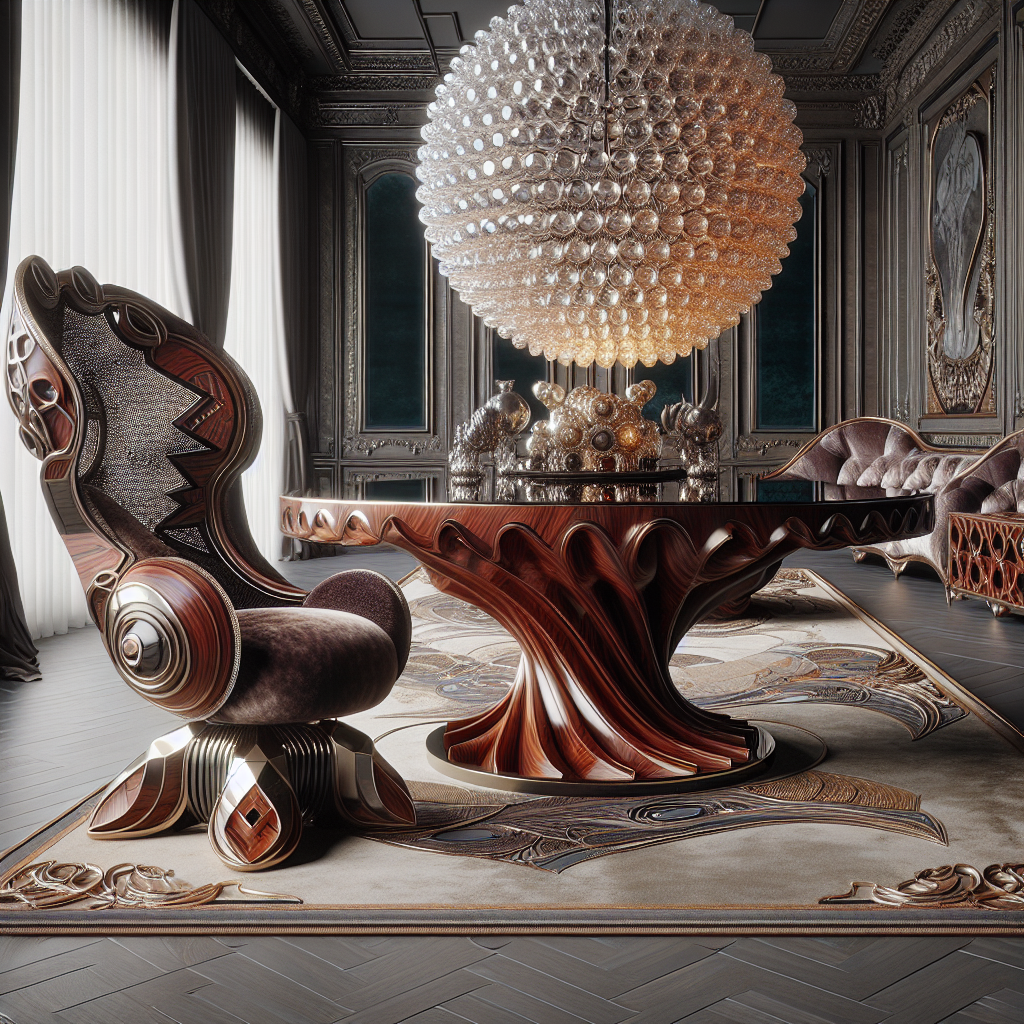
In recent years, the world of high-end furniture design has witnessed a fascinating evolution, where sustainability and luxury are no longer seen as mutually exclusive. Instead, they have become intertwined, creating a new wave of avant-garde furniture that is as eco-friendly as it is opulent. This shift is not just a trend but a reflection of a broader movement towards responsible consumption, where discerning consumers are increasingly seeking pieces that not only elevate their living spaces but also align with their values.
One of the most exciting aspects of this movement is the innovative use of materials. Designers are pushing the boundaries by incorporating sustainable resources such as reclaimed wood, recycled metals, and organic textiles into their creations. These materials, once considered unconventional for luxury furniture, are now celebrated for their unique textures and stories. For instance, a dining table crafted from reclaimed barn wood not only boasts a rustic charm but also carries with it a history that adds depth and character to any room. Similarly, recycled metals are being transformed into sleek, modern pieces that challenge traditional notions of what luxury should look like.
Moreover, the craftsmanship involved in creating these pieces is nothing short of extraordinary. Artisans are employing age-old techniques alongside cutting-edge technology to ensure that each piece is not only beautiful but also built to last. This commitment to quality over quantity is a hallmark of sustainable luxury, as it emphasizes the importance of investing in pieces that will stand the test of time. By doing so, consumers are encouraged to move away from the throwaway culture that has dominated for so long and instead embrace a more mindful approach to furnishing their homes.
In addition to materials and craftsmanship, the design philosophy behind avant-garde eco-friendly furniture is also noteworthy. Designers are drawing inspiration from nature, creating pieces that mimic organic forms and patterns. This biophilic approach not only enhances the aesthetic appeal of the furniture but also fosters a deeper connection between the inhabitants and their environment. Imagine a chair that resembles the gentle curve of a leaf or a coffee table that mimics the intricate patterns of a honeycomb. These designs not only captivate the eye but also serve as a reminder of the beauty and complexity of the natural world.
Furthermore, the rise of sustainable luxury furniture is also being driven by a growing awareness of the environmental impact of traditional manufacturing processes. Many high-end furniture brands are now prioritizing eco-friendly production methods, such as using water-based finishes and low-VOC adhesives, to minimize their carbon footprint. This commitment to sustainability extends beyond the final product, as companies are also focusing on ethical sourcing and fair labor practices, ensuring that every step of the production process is as responsible as possible.
As we look to the future, it is clear that the marriage of sustainability and luxury in furniture design is here to stay. This exciting development not only offers consumers the opportunity to own beautiful, one-of-a-kind pieces but also empowers them to make choices that reflect their commitment to a more sustainable world. By embracing this new wave of avant-garde furniture, we can all play a part in pushing the boundaries of what luxury means and, in doing so, create a more harmonious relationship between our homes and the planet.
The Influence of Art Movements on Avant-Garde Furniture Aesthetics
When it comes to avant-garde luxury furniture, the influence of art movements is undeniable. These movements have not only shaped the aesthetics of high-end furniture but have also pushed the boundaries of what is considered possible in design. From the bold geometric forms of Cubism to the fluid lines of Art Nouveau, each movement has left its mark, creating a rich tapestry of styles that continue to inspire designers today.
Take, for instance, the impact of the Bauhaus movement. Known for its emphasis on functionality and simplicity, Bauhaus has inspired furniture pieces that are both practical and visually striking. The clean lines and minimalist approach championed by Bauhaus designers have become a staple in modern luxury furniture, where less is often more. This movement taught us that beauty can be found in simplicity, and that philosophy continues to resonate with those who appreciate understated elegance.
Transitioning from the minimalist to the more expressive, the influence of Surrealism on avant-garde furniture is equally fascinating. Surrealism, with its dreamlike and often bizarre imagery, has encouraged designers to think outside the box, quite literally. Furniture pieces inspired by this movement often feature unexpected shapes and whimsical elements, challenging our perceptions of reality. These pieces invite us to explore the boundaries of our imagination, making them perfect conversation starters in any luxury setting.
Moreover, the Art Deco movement has also played a significant role in shaping avant-garde furniture aesthetics. Known for its opulence and glamour, Art Deco introduced a sense of luxury that is still sought after today. The use of rich materials, bold colors, and intricate patterns in Art Deco furniture has influenced contemporary designers to create pieces that exude sophistication and elegance. This movement reminds us that luxury is not just about comfort but also about making a statement.
In addition to these movements, the influence of Pop Art cannot be overlooked. Pop Art’s vibrant colors and playful themes have inspired furniture designers to incorporate bold hues and unconventional materials into their creations. This movement has encouraged a sense of fun and irreverence in luxury furniture, allowing for pieces that are not only functional but also visually exciting. Pop Art teaches us that luxury can be both serious and playful, a balance that many designers strive to achieve.
Furthermore, the impact of the Memphis Group in the 1980s brought a radical shift in furniture design. Known for its bold colors, abstract shapes, and unconventional materials, the Memphis Group challenged traditional notions of taste and style. This movement has inspired a new generation of designers to embrace boldness and creativity, resulting in furniture pieces that are as much works of art as they are functional objects.
In conclusion, the influence of art movements on avant-garde luxury furniture is a testament to the ever-evolving nature of design. These movements have not only shaped the aesthetics of high-end furniture but have also encouraged designers to push the boundaries of creativity. By drawing inspiration from the past, contemporary designers continue to create pieces that are innovative, luxurious, and truly avant-garde. Whether it’s the simplicity of Bauhaus, the whimsy of Surrealism, the glamour of Art Deco, the playfulness of Pop Art, or the boldness of the Memphis Group, each movement offers a unique perspective that enriches the world of luxury furniture design.
Customization and Personalization in Avant-Garde Luxury Furniture Design
In the world of avant-garde luxury furniture design, customization and personalization have become the cornerstones of creating truly unique pieces that reflect the individuality of their owners. As we delve into this fascinating realm, it’s clear that the days of one-size-fits-all are long gone. Instead, designers are pushing boundaries, crafting bespoke creations that not only serve a functional purpose but also tell a story. This shift towards personalization is not just a trend; it’s a movement that celebrates the art of self-expression and the desire for exclusivity.
To begin with, the allure of customized furniture lies in its ability to transform a living space into a personal sanctuary. Imagine walking into a room where every piece of furniture has been meticulously designed to resonate with your personal style and preferences. This is the magic of avant-garde luxury design, where the possibilities are as limitless as your imagination. Whether it’s a sofa with a unique silhouette or a dining table crafted from rare materials, each piece is a testament to the owner’s taste and vision.
Moreover, the process of customization is an intimate journey between the designer and the client. It starts with a conversation, where ideas are exchanged, and visions are shared. This collaborative approach ensures that the final product is not just a piece of furniture but a reflection of the client’s personality and lifestyle. Designers often draw inspiration from various sources, such as art, nature, or even the client’s personal experiences, to create something truly one-of-a-kind. This level of personalization is what sets avant-garde luxury furniture apart from mass-produced items.
In addition to the aesthetic appeal, customized furniture also offers practical benefits. For instance, it allows for the optimization of space, especially in homes with unconventional layouts. By tailoring furniture to fit specific dimensions and needs, designers can create pieces that maximize functionality without compromising on style. This is particularly important in urban settings, where space is often at a premium. Furthermore, personalized furniture can be designed to accommodate specific requirements, such as ergonomic features or storage solutions, making it not only beautiful but also highly functional.
As we explore the world of avant-garde luxury furniture, it’s important to acknowledge the role of technology in this evolution. Advances in digital design tools and manufacturing techniques have made it easier than ever to bring bespoke creations to life. From 3D modeling to precision cutting, technology has opened up new avenues for designers to experiment with form and function. This fusion of craftsmanship and innovation is what allows for the creation of truly avant-garde pieces that challenge conventional design norms.
Finally, it’s worth noting that the demand for customized luxury furniture is not limited to private residences. High-end hotels, restaurants, and even corporate spaces are increasingly seeking bespoke solutions to create environments that stand out and leave a lasting impression. This trend underscores the growing appreciation for individuality and the desire to create spaces that are as unique as the people who inhabit them.
In conclusion, the world of avant-garde luxury furniture design is a celebration of creativity, individuality, and innovation. Through customization and personalization, designers are pushing the boundaries of what is possible, crafting pieces that are not only functional but also deeply personal. As this movement continues to gain momentum, it’s exciting to imagine the endless possibilities that lie ahead in the realm of high-end furniture design.
Conclusion
Avant-Garde Luxury in high-end furniture design represents a bold and innovative approach that challenges traditional aesthetics and functionality. By pushing boundaries, designers in this realm experiment with unconventional materials, forms, and techniques, creating pieces that are not only functional but also serve as artistic statements. This movement often blurs the line between art and furniture, offering unique, bespoke creations that cater to a discerning clientele seeking exclusivity and originality. The avant-garde approach in luxury furniture design continues to redefine the possibilities of interior spaces, emphasizing creativity, individuality, and the transformative power of design.